Weronika Klecel, PhD

Evolutionary
genomics in the wild.

I study how inbreeding, demography and environment shape the health and persistence of small equid populations.

Postdoctoral Researcher University of Calgary Poissant Lab

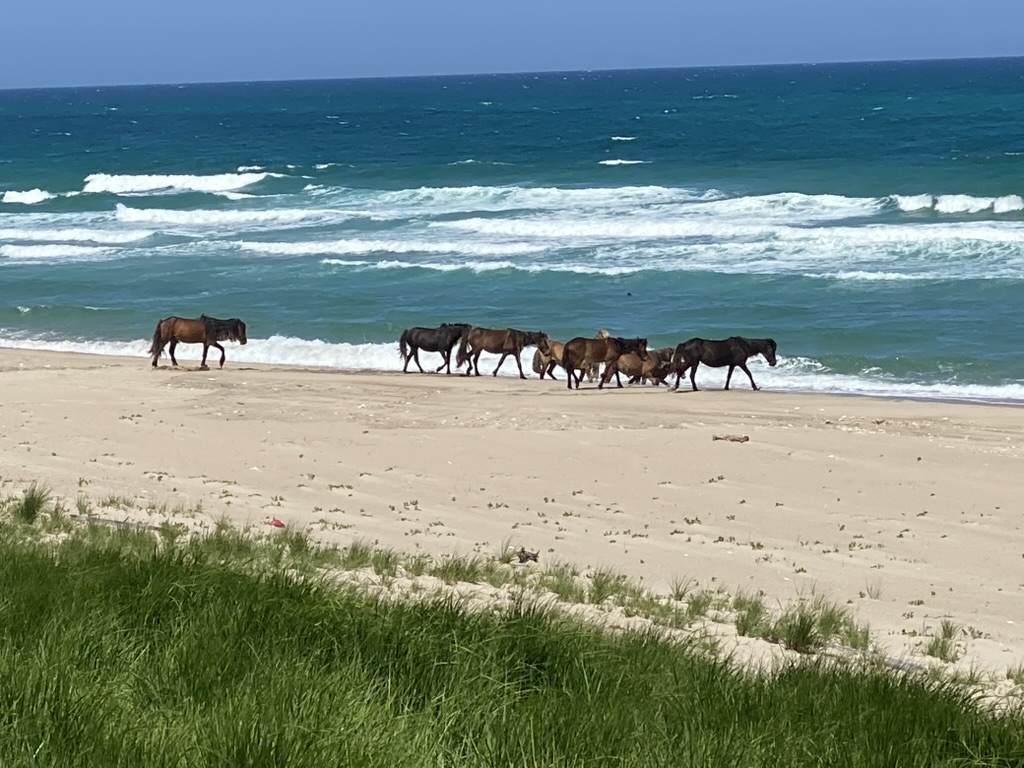
Sable Island horses walking along a sandy beach beside breaking Atlantic waves
Sable Island, Nova Scotia · Photo: Weronika Klecel

Research

From genomes to the fate of populations.

My work connects molecular variation with individual health, reproduction and survival. By combining long-term field records, genomic data and computational phenotyping, I ask how small populations persist—and how evidence can improve their conservation.

01

Individual fitness

Inbreeding depression

I investigate how genomic inbreeding affects survival, reproduction and health—and whether condition, stress, parasites and morphology help explain those effects.

  • Runs of homozygosity
  • Longitudinal fitness records
  • Health-mediated pathways
02

Population persistence

Conservation genomics

I study how demography, genetic drift and selective histories shape diversity in small or isolated populations, translating genomic evidence into management-relevant insight.

  • Population structure
  • Pedigree reconstruction
  • Genetic diversity
03

Traits at scale

Quantitative phenotyping

I combine computer vision, geometric morphometrics and reproducible data pipelines to turn images and video into biologically meaningful phenotypes.

  • Markerless pose estimation
  • Body size and conformation
  • Open analytical tools

Current programme

Poissant Lab · University of Calgary

Sable Island Horse Project

What are the hidden costs of mating with relatives?

Sable Island offers a rare opportunity to connect individual genomes with more than a decade of ecological and life-history observations. I use this system to quantify inbreeding depression, identify the traits that mediate it, and explore its consequences for population viability.

Supported through the University of Calgary’s VPR Postdoctoral Excellence Award (formerly the VPR Postdoctoral Match-Funding Program).

GenomicsDemographyEcologyHealthComputer vision
Sable Island, Nova Scotia43.9°N · 60.0°W

Selected publications

Work across genomes, pedigrees and phenotypes.

All publications

Fieldwork

Long-term data, read in the landscape.

The strongest genomic questions begin with careful observation.

On Sable Island, individual-based monitoring links identity, reproduction, survival, body condition, parasites, behaviour and environment. My role sits at the intersection of those field records and genomic analysis.

  1. 01Observe

    Collect consistent individual and ecological records.

  2. 02Connect

    Integrate genomes, pedigrees, phenotypes and life histories.

  3. 03Translate

    Turn population evidence into conservation insight.

Teaching & mentorship

Making genetics usable.

I teach genetics by connecting foundational concepts to real biological decisions—from inheritance and population processes to genomic data analysis.

Population geneticsGenetic determinants of healthEpigeneticsBioinformaticsReproducible analysis

About

Evolutionary geneticist. Equine scientist. Field ecologist.

I am a postdoctoral researcher at the University of Calgary’s Faculty of Veterinary Medicine. My work bridges evolutionary genomics and applied conservation, with a long-term goal of leading a research group focused on the health and persistence of small equid populations.

Postdoctoral AssociateUniversity of Calgary · Poissant Lab
Visiting ResearcherUniversity of Florida · Brooks Equine Genetics Lab
PhD, Animal ScienceWarsaw University of Life Sciences

Collaborate

Let’s connect good questions with good data.

I welcome collaborations in evolutionary genomics, equine science, conservation genetics and computational phenotyping.

weronika.klecel@ucalgary.ca